Thứ Năm, 30 tháng 8, 2012

Metal Gear Solid: Ground Zeroes Announced


Hideo Kojima has kicked off the Metal Gear 25th anniversary event in Japan. A stage show is currently being held for new announcements.

Following the Metal Gear Solid movie unveiling and less-exciting Metal Gear Solid Social Ops game for GREE, Kojima pulled back the curtain on a brand new Metal Gear Solid game – Metal Gear Solid Ground Zeroes.

Based on a variety of tweets, it’s an open-world title that uses the Fox Engine. Platforms haven’t been confirmed as of yet, but a demo was shown running on a PC at current-gen specs.

From 8-4′s Mark McDonald:

“Demo of ‘Metal Gear Solid Ground Zeroes’, started w cutscene (all realtime), went into gameplay, open world, night, raining, base. AMAZING … Snake crawled @ avoiding searchlights, killed guard, rode jeep, called in heli for evac. Sounds like MG, but the scale & atmosphere… Wow.”

Source

Thứ Tư, 29 tháng 8, 2012

3DS Can Accept 128GB SDXC Cards


As long as your format your SDXC card to FAT32, it should be able to work with a 3DS unit.

That’s a heck of a lot of storage though… even 64GB would seem like enough! Although, now that retail games are starting to show up on the eShop, maybe using a large SD card isn’t such a bad idea.

Source

Most Disappointing Games Of 2012 So Far


With 2012 over half way done we decided to look at some of the games that left us disappointed. While these may not be terrible they were never the less disappointing for various reasons. If you disagree, agree or want to submit your own choices then feel free to comment!


Sean Halliday:

Ghost Recon Future Solider


As someone who didn’t mind the switch from tactical shooter to third person action shooter, I thought I’d enjoy future solider. Unfortunately the game fell flat at almost every turn for me. The campaign felt like a loosely stitched together set of rather dull and prolonged missions. Holding off a area from wave after wave of enemies was used way too much and far too often.

The action had its moments, but for the most part it felt dragged out and very tame. The gadgets added nice little touches here and there but ultimately felt rather gimmicky. With little to no narrative and a general hit or miss mission selection, Future Solider felt hollow both in single player and on co-op. Multiplayer wasn’t much better with some poor maps which often resulted in grenade spam. While some of the game modes were fun, the overall quality of the multiplayer was lacking. A number of nice ideas sprinkled into a rather average multiplayer experience. Gun smith was a nice novelty to play around with, but that was about it. Ghost Recon: Future Solider wasn’t a bad game, it simply left me feeling underwhelmed and disappointed.


Stephen:

Alan Wake : American Nightmare


Alan Wake was one of 2010′s biggest surprises, at least for me. It offered an engaging narrative, great visual style that contributed to the atmosphere and an overall compelling experience. Naturally, when I heard of a new Alan Wake title arriving on the Xbox Live Arcade platform, my nerve endings twitched with excitement. Unfortunately, American Nightmare wasn’t a continuation of the experience I had fondness for, rather a step backwards.


Easily the biggest flaw concerning American Nightmare was the ‘Groundhog Day’ nature of the story, whereby you replayed the same three sections three times each, with slight variations each time. Not only did it feel like the developers had run out of ideas so they repeated what they had to artificially extend the game’s length, but it removed a crucial element to what made the original Alan Wake so compelling – the feeling of not knowing what lay ahead. When you played through each chapter in AN, you knew what to expect, when you expect it and how to kill it. The result was a frustratingly simple experience that was only made difficult if you had a memory that couldn’t be cast back half an hour.


I was expecting so much from American Nightmare that what it eventually produced underwhelmed on so many levels, from the tedious narrative style described above, to the lack of intriguing characters and more. I never expected Alan Wake 2 but I was hoping for a title that could bridge the gap between the original and its inevitable sequel. Needless to say, that simply didn’t happen. American Nightmare felt like nothing more than a spin-off to Night Springs, the TV show prominently featured in the games, and a poor one at that. Had it it been a TV show, it would’ve been cancelled before the first season had even concluded.


Sean Clayton:

Prototype 2


Although the original Prototype came out amongst some great company (inFamous, Red Faction: Guerrilla) it was more than capable of holding its own; with a decent story-driven element that drove you forward and a power-fantasy element that went above and beyond what the competition offered. Prototype 2 missed the point completely when it followed up in early 2012 with a less compelling, less driven mess of a game that offered none of the flair of the original. Prototype 2 seemed to miss the idea of balance that the first game was excellent at capitalising on; yes, you were an over-powered mutant but you also had a heart and a driving force while, in the sequel, you were a heartless killing machine with a throwaway story, seemingly drawing from such games as Army of Two with its douchey fist-bump humour that overshadowed what could have been a fun experience. The violence had become uniform, unearned and less desirable. The power-fantasy was exponentially bigger and yet the drive to discover more of these powers and live out such dreams was gone. The sequel lost focus and therefore balance and became little more than a plod to the end just to see the completion of the weaker story and to never have to come back to the game again.

Source

Goodbye OnLive, hello Square Enix. Core Online service lets you play high-definition games in your browser


Coming off the OnLive crash, gamers may not be ready to believe in a revolutionary new game technology. But that’s exactly what Japan’s Square Enix is promising with its Core Online service, which enables free-to-play high-definition games in a web browser. No discs. No installation. No waiting. You just click on a browser link and start playing.

Like cloud gaming, the technology and its free-to-play business model offers yet another promise to make $60 console game and the physical retailer into dinosaurs. But innovation is more believable because it is coming from Square Enix, which is one of the world’s biggest game publishers. (Its Final Fantasy games have sold 100 million units worldwide). Google is playing a key part as well. The technologies show that the age of 3D gaming on browsers is upon us.

Tokyo-based Square Enix’s subsidiary, Hapti.co studio, developed the technology so that users can play popular console-quality games on the web. Those games include titles like Hitman: Blood Money, Mini Ninjas, and Lara Croft and the Guardian of Light (pictured at top).


“Square Enix is at the forefront of experimentation of new business and services models in the game industry,” said Yoichi Wada, chief executive officer of Square Enix Holdings. “Through our Core Online technology service, users can access our content easily through the browser.”

The technology combines Google’s Native Client platform that allows a web page to tap a computer’s 3D graphics hardware to render images inside the web page. It also takes advantage of Square Enix’s own proprietary technology to extend Core OnLine to both the Firefox and Internet Explorer web browsers.

The result is a reduction in friction, or delays and obstacles that stop people from playing games instantly. With Core Online, users can click on any level in a game and start playing it immediately. When you save the game, it is stored in the cloud, so that you can access the game and starting playing again in the same spot from any compatible web browser.

Square Enix is also kicking off a new business model for Core Online. Players can play for free if they click on video ads that are similar to TV advertising. Once you watch the ad, you can play the game for another 10 minutes or so. Or you can skip the ads by purchasing levels or entire games.

The three games mentioned above will be available with the launch of Core Online in October. An upcoming title is Tomb Raider: Underworld, another title in the blockbuster Lara Croft series (which has sold 35 million units), and Gyromancer (a title in the works at Square Enix Japan) will also be available on the service. More titles will be coming within the year.

Of course, the newest titles coming from Square Enix — like the Tomb Raider reboot and Hitman: Absolution — will still require a disk or a lot of storage on a PC or console. The browser-based games will probably start out small, based on older generation games, and become more ambitious over time.

In an exclusive response to email questions from GamesBeat, Wada said that the team at Hapti.co studio started developing a browser-based plug-in for Windows games in 2011. They called the technology the Square Enix Secure Launcher.

“From there, Hapti.co was quietly experimenting with the technology and created a service around the plug-in, as well as the efforts of our Native Client work with Google, to bring our games to the consumer in a friendly and flexible way,” Wada (pictured right) said. “That began with Mini Ninjas in March 2012. We’re now ready to take the next step and spread the word about the service to our fans as we evolve the content selection and business models.”


Wada is being careful not to hype the business opportunity yet. He said, “We’re in an early phase where we are understanding consumer’s interest and preferred payment models. The browser allows us to present content in unique ways; users can now play high-definition games instantly, on any supported PC, starting and stopping where and when they wish. This is a new frontier for us, and we’re absorbing significant knowledge as we take the lead and grow the service.”

David Guldbrandsen, managing director of Hapti.co studios, said via email that Core Online is using Google’s Native Client technology as well as other enhancements. Mini Ninjas is already available on the Chrome Web Store as a featured app with 3D graphics. The Square Enix Secure Launcher extends the 3D technology so that it can run in Internet Explorer and Firefox. It uses Microsoft’s ActiveX for Internet Explorer and Mozilla’s Napi technology for other browsers. The technology is similar to Adobe’s Flash or Unity Technologies’ 3D browser plug-in, which you download once.

“The plug-in in itself is very small but allows us to execute game code efficiently within the browser,” Guldbrandsen said. “In time we want to release as many fantastic Square Enix games as possible. It is our ambition to give everyone the possibility to play a great variety of games with very high quality.”

In contrast to OnLive or Valve’s Steam service, the browser is the delivery platform. Yesterday, Firefox separately announced its support for compressed textures, which frees up memory that game developers can use to run better browser games.

Source

America’s not loving PlayStation All-Stars


Sony usually has huge Triple A titles set to release in the Fall. This year’s a bit different.

They’re banking a lot into their new IP (Super Smash Brawl rip off cough*) PlayStation All-Stars Battle Royale, created by new developer team Super Bot.

Anyone who buys the game (not used) gets a free copy of All-Stars for their slow-selling Vita. In addition, anyone who pre-orders the game gets exclusive costumes for certain fighters in the game.

With all that said, it seems none of the perks are affecting gamers in the states. PlayStation All-Stars Battle Royale pre-orders are looking pretty awful thus far. The game is three months away from release and it has only managed to produce 16,696 pre-orders. This past week it only managed to add 1,139 pre-orders.

That’s almost equivalent to what The Last of US added this past week (1,119.) To make matters worse, The Last of Us has already doubled the pre-orders of All-Stars with 35,265 and that’s scheduled to come out next year.

Perhaps things will turn around for All-Stars before the game releases? For more information check back later with Non-Specific Action.

Source

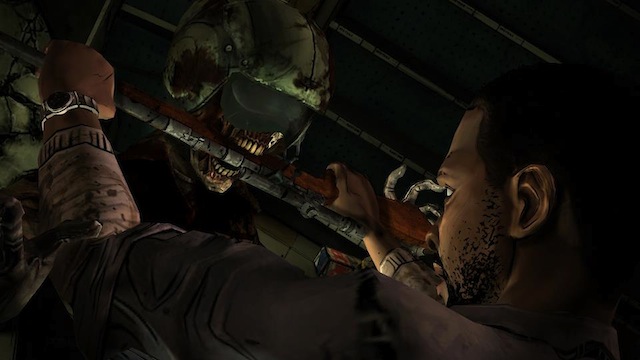
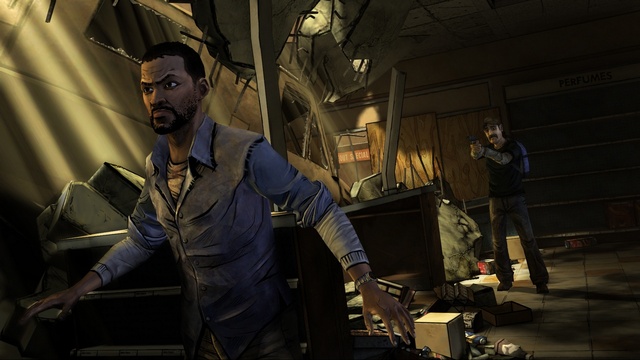
The Walking Dead: The Game – Episode 3: Long Road Ahead Review


The first two episodes of The Walking Dead: The Game slowly introduced players to a twisted world filled with zombies and crazies that forced us to make tough decisions based on how we thought our version of Lee would take these various scenarios. These different decisions that we have had to made in Episodes 1 and 2 have been able to give us a general outline of a “good and bad” way to do things. Episode 3 takes all of those defined lines and blurs them completely.

Long Road Ahead makes all of the previous decisions seen in the past two episodes seem trivial. You will start to wonder if what you are doing is right or not. But is it worth playing through to get some more of the story? Here are the Hots and Nots of The Walking Dead: The Game – Episode 3: Long Road Ahead.

Hots

A Story Where You Evolve
Long Road Ahead is the third installment in The Walking Dead: The Game that tells the story of Lee Everett, a man with a troubled past who has taken a girl named Clementine into his care in the midst of a zombie apocalypse. The third episode takes place not too long after the events of the second episode. The bandits we witnessed while on the farm now have nowhere else to go and that means nothing but trouble for Lee and his fellow survivors. On top of that Kenny and Lilly are still at each others throats and it turns out their is a thief in their ranks. All of this progresses based on the decisions you have made in the previous episodes as well as the decisions you will have to make in this episode.
The decisions you will face in episode 3 are unlike the others you were faced with in the previous episodes. I used to think that there was a clear cut choice between “good” and “bad” decisions before I faced what I did in episode 3. Now I have to look back at the decisions I made and wonder if what I did was morally right or not. This isn’t just a story about Lee Everett, this is a story about us. Lee is the puppet, and we are the puppet masters.
Gameplay Is Still Solid
Episode 3 features one variation in the gameplay along with the standard mechanics we have seen in the past two episodes. This time around the episode features shooting along with the problem solving and conversation mechanics. It isn’t difficult to pick up and it fits right in with the vibe of the game and its story. Telltale Games stuck with what works for everything else and that isn’t a bad thing at all. So long as they stick to this formula for the final two episodes there shouldn’t ever be a problem with it.
Graphics and Voice Work Get You Immersed
The vibrant comic style and excellent voice work still work great in unison and get you extremely immersed in the game and its story. The art style works well for the game and it makes every scene pop in a different way, whether its an intense situation or a gruesome zombie take-down. The voice work from all the characters portrays the moods very well and is convincing enough to make you feel emotions based on the situation, ranging from empathy to anger. It is also worth noting that I did not experience any drops in the audio this time around, a problem which has been prevalent in the past two episodes.
Replay Values Is Through The Roof
As with the previous two episodes, completing episode 3 will make you want to go back and replay it so you can see all of the different choices that you can make. It also makes you want to run through the previous two episodes so you can see what else will change in this episode. There are so many different possibilities and branches in the story that it will take dedicated players quite a while to get through them all.

Nots

Minor Graphical Hiccups During Action
The only thing that I could see that was wrong with this episode was that there were points where the frame rate would get choppy during the action sequences scattered throughout the episode. This is by far nothing major and does not really detract from the experience. This is probably the most solid entry in the series.

Conclusion

The Walking Dead: The Game – Episode 3: Long Road Ahead is by far the strongest entry in the series so far. It tells a riveting story with excellent character progression and is chock full of intense moments. Players who have the season pass will not be disappointed with their purchase. Those who are still spending the $5 should definitely think about picking up the third entry in this amazing series. Hopefully we won’t have to wait too long for the release of Episode 4 because I can hardly wait to continue this amazing story.
[Editor's Note: The Walking Dead: The Game - Episode 3: Long Road Ahead was reviewed on the PlayStation 3 platform. The game was provided to us by the publisher for review purposes.]

Review Score: 89/100

The Elder Scrolls V: Skyrim -- Hearthfire Announced


Bethesda has revealed the next major downloadable content for Skyrim, called Hearthfire. Unlike the vampire-hunting focus of the last add-on, Dawnguard, Hearthfire doesn't seem to do much to enhance combat. Instead, with Hearthfire you'll be able to purchase a piece of land in Skyrim and build your own house.

Within the custom living space you'll be able build kitchens, greenhouses, libraries, alchemy labs and trophy rooms to show off your accomplishments. Outside it sounds like you'll be able to set up gardens, fish hatcheries and beehives to make resource collection a little more convenient. You can also hire a steward to help out with household tasks.

Hearthfire will also allow you to adopt children and take care of them while they live at your home. Bethesda has set the price of Hearthfire at 400 Microsoft Points and plans to release it on September 4 on Xbox Live. Check out the full trailer below.

Source